Mieko Kawakami's 'Breasts and Eggs', a quest for boredom

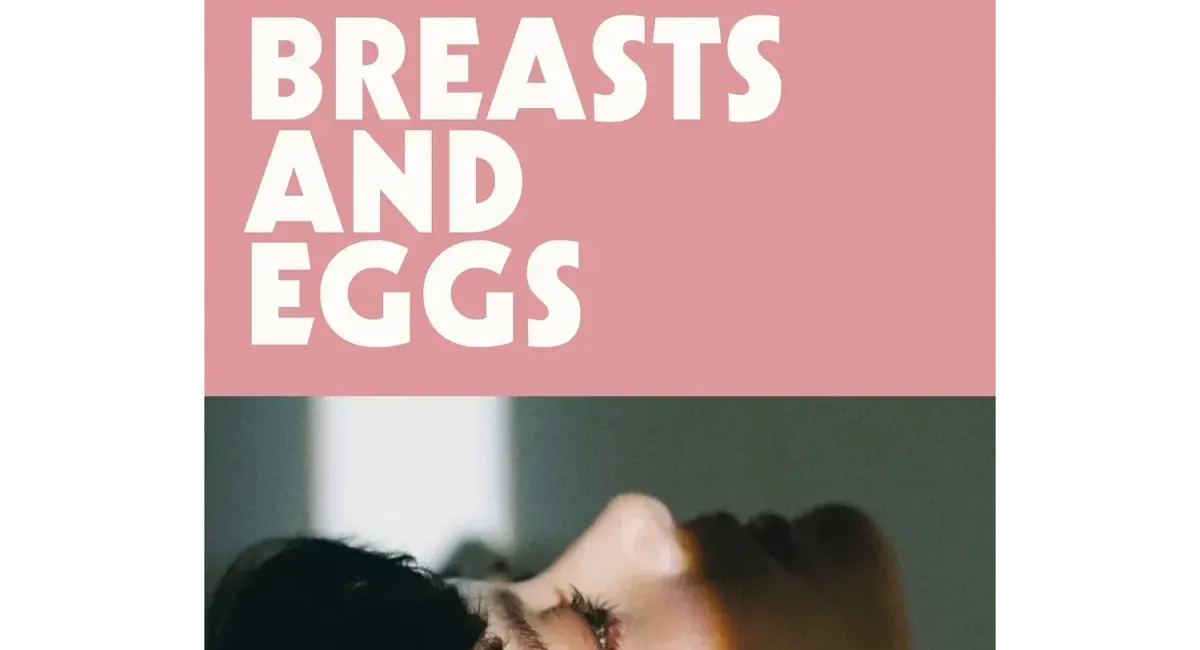
Here's a case of a book I picked up in Kinokuniya Abu Dhabi (probably one of my favorite bookshop, and a mandatory stop when I pass by) because the cover looked nice. It turns out that, unfortunately, the cover is way better than the book itself. I don't know if Mieko Kawakami's style was lost in translation, but this is probably one of the most boring books I've read in years. This is not exclusively because of the story (and its second part is hardly worth reading), but mainly because of the writing, which is terribly bland and evokes nothing but a gentle ennui.
Initially, I was enthusiastic with Breasts and Eggs when we got to know Natsuko, an aspiring writer in Tokyo trying to get her life together, who starts questioning her desires as a woman when her sister from Osaka comes to stay with her, bringing her niece, who hasn't spoken to her mum in months. What should have been a nice little holiday turns into an interrogation about life choices when her sister, Makiko, tells her that she came to Tokyo seeking breast augmentation. Behind her sister's desire to change her body, Natsuko wonders what could drive someone to this, whether it's social pressure on women or a fear of losing her youth. This first part lacks any kind of impressive writing (once again, it might be because of the translation), but it is thought-provoking thanks to Natsuko's bold character, which is unusual in Japanese society for a woman who is expected to be cute and quiet. Even more as a young woman in Tokyo, who's trying to fit in as she struggles to get her career as a writer going.
But then the second part of the book starts, which is much longer (about two-thirds of the book) and looks like it has nothing to do with the beginning. This is probably partly true, as the first part was originally a standalone novella written by Mieko Kawakami and was later included in this two-part book. The second story still follows Natsuko and tries to tie its events to the first part by referencing her sister and niece, but their characters have changed so much that they're barely recognisable. Now, we follow Natsuko as she embarks on a quest to become pregnant through an anonymous donor. It turns out that she cannot have sex due to a lack of desire and physical discomfort. While this could have been interesting, Mieko Kawakami barely knows what to do with it. We don't really understand Natsuko's desire to get pregnant - she barely mentions what she would do with a child, what brought her to this desire. This could have formed the basis of an interesting conversation with a woman towards the end of the book, who attempts to understand Natsuko. However, Kawakami avoids addressing this issue. This doesn't help, given that Natsuko is an unthrilling narrator who can barely make any choices or decisions, always going with the flow without any opinion or input (which is completely different from the first part of the story, as if the character were not the same).
Behind the mystery, it's a vain attempt at thought-provoking literature that fails to provoke any thoughts. The second part lacks substance, merely adding random events on Natsuko's daily life, in which she meets people who were born thanks to anonymous donations. Most of them turned out to be completely lost without a father, building some weird support group, raising one question: what is Mieko Kawakami trying to say? Is she taking a stance against artificial insemination through anonymous donation? Or is she exploring whether a woman should bring a child into the world alone? Who knows, because she ends the book with a happy ending that makes no sense in light of what has gone before. She seems to have forgotten everything that happened in the first part of her story, written a couple years earlier. Initially, Natsuko's character was very modern: a Japanese woman who went against what society expected of her. However, she ultimately makes a life-changing choice that is, in reality, very conformist and as bland as the writing.