(Re)playing Samurai Western, he's a poor lonesome samurai

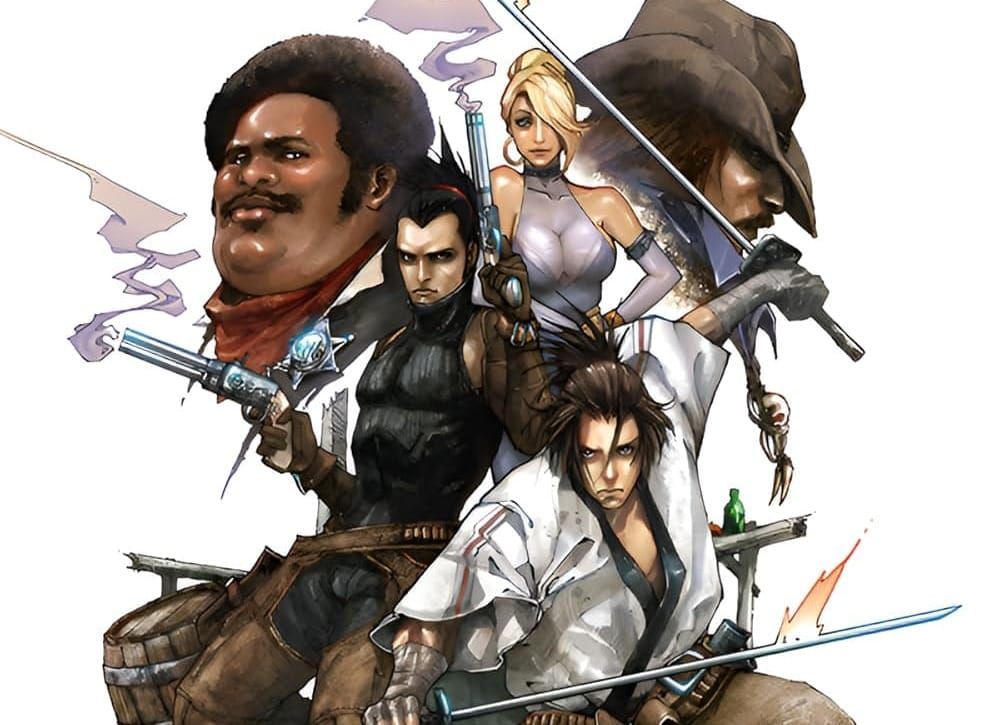
Exploring PS2 games that I missed back in the day has led me to discover some unexpected experiences. This is not only because some of them are "hidden gems", but also because even the average games of that time could be surprisingly enjoyable. Samurai Western (2005) is one of them. I came across the game in the seemingly endless PS2 catalogue by pure luck. I knew absolutely nothing about it, yet the title was enough to get my attention. Who wouldn't want to play as a samurai in the Wild West?
Developed by Acquire, the team behind the Tenchu, Shinobido and Way of the Samurai series, and more recently Octopath Traveler, Samurai Western boasts a gameplay style that is both appealing and unique. Perhaps I liked it so much because I played it right after finishing a terrible game, but the fast-paced action and dynamic sword fighting certainly hit the spot. The game does not have a combo system per se, but it does require players to react quickly thanks to the characters' fast actions: attacking and dodging in a ballet of bullets and explosions, the difficulty comes from the variety of attacks that players have to sustain without catching a breath. It's challenging, but very rewarding when we finally enter the flow that the game wants us to achieve. Tied to its lovely Wild West atmosphere, it is so satisfying to go through each level and slowly learn how to defeat every type of enemy. The game can be repetitive due to its limited number (but interesting) of environments and enemy types, but it manages to reinvent itself with a variety of weapons that can be unlocked and used, with very different gameplay style for each. The character's statistics progression, as we can spend points earned through missions on health, defence or power, also helps overcome the various levels that the game presents to the player.
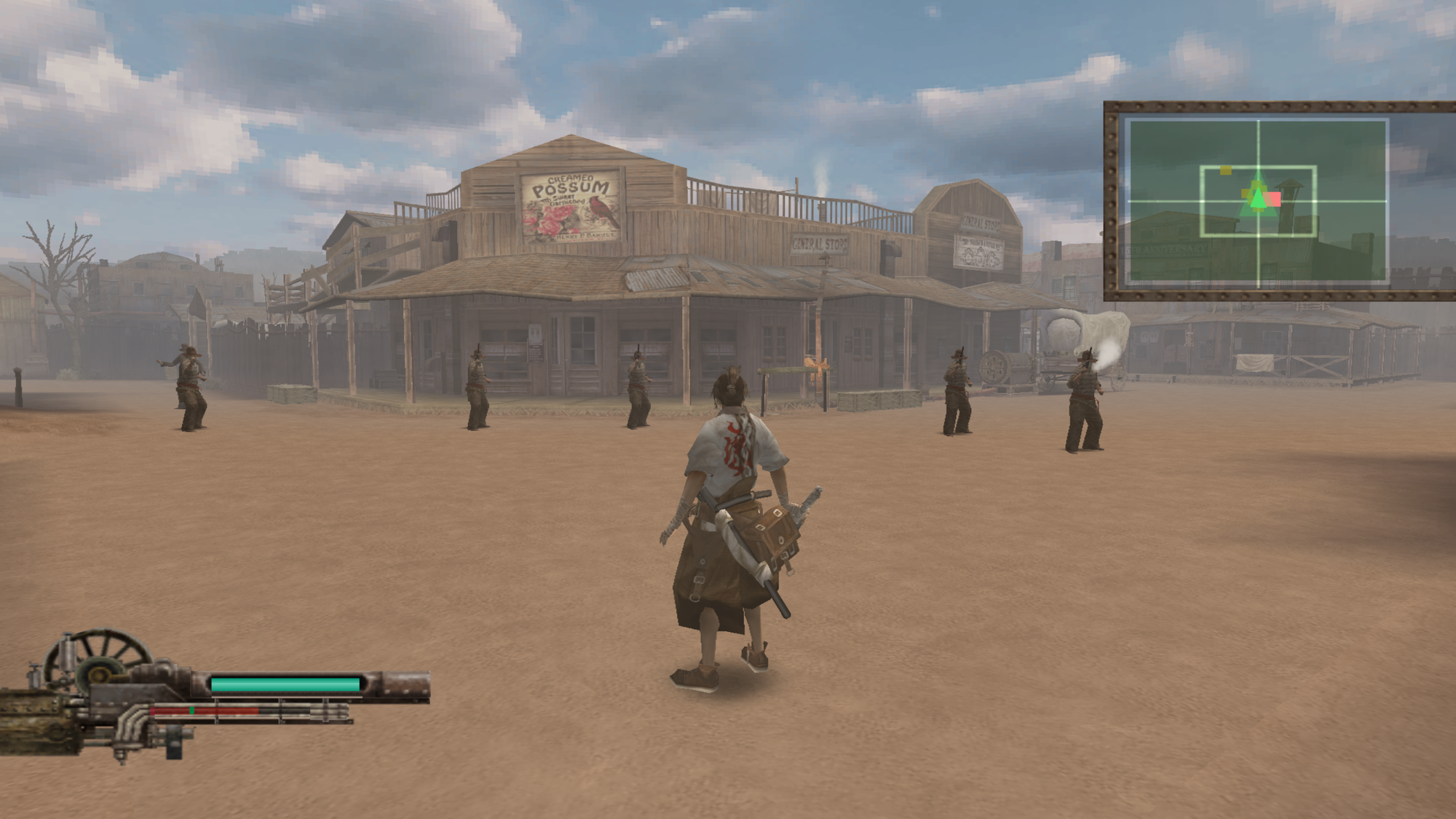
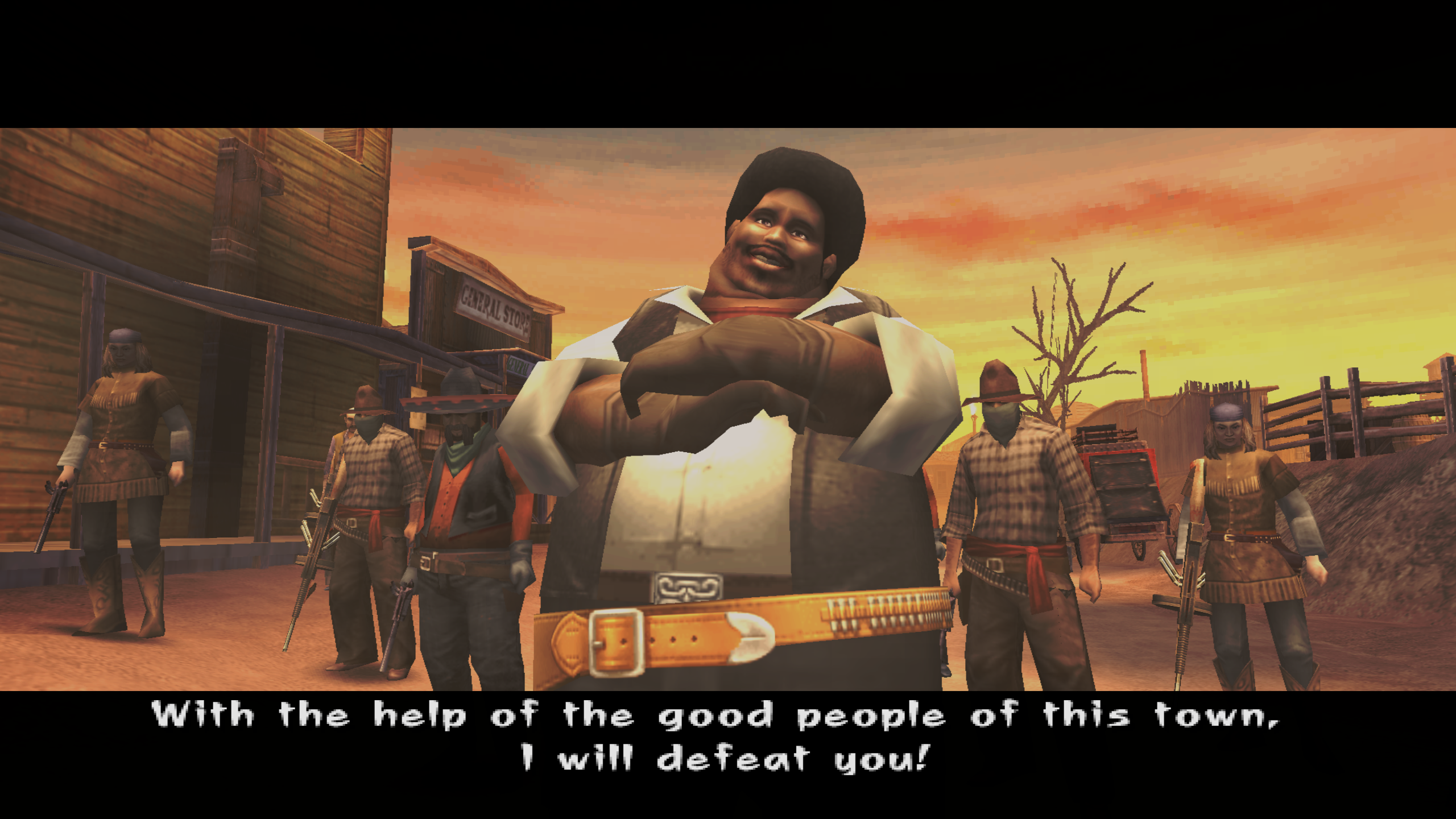
The Wild West and unfriendly cowboys, it's all Samurai Western is about.
Story-wise, Samurai Western is set in America in the 1800s. The main character, Gojiro, has come from Japan to find and kill his brother, Rando. Upon arriving, Gojiro discovers that the region is under the tyrannical influence of a gold tycoon named Goldberg. He decides to help the locals free themselves from their tyrant. While the story is very classical, it works quite well thanks to catchy dialogue, very clichéd yet funny characters with strong American accents, a couple twists and an overall unserious vibe that makes its sixteen levels fun to go through. I'll admit that I didn't manage to finish the extra five or six levels, which are unlocked under specific conditions, as the required skill level became a bit too high for me. However, it didn't hinder my enjoyment, as the main story campaign was exactly what I was hoping for: a "mid" game that is neither too ambitious nor too poor, revolving around a smart gameplay idea, a genre that was plenty during the 128-bit era but has become rare these past ten or fifteen years due to rising development costs.
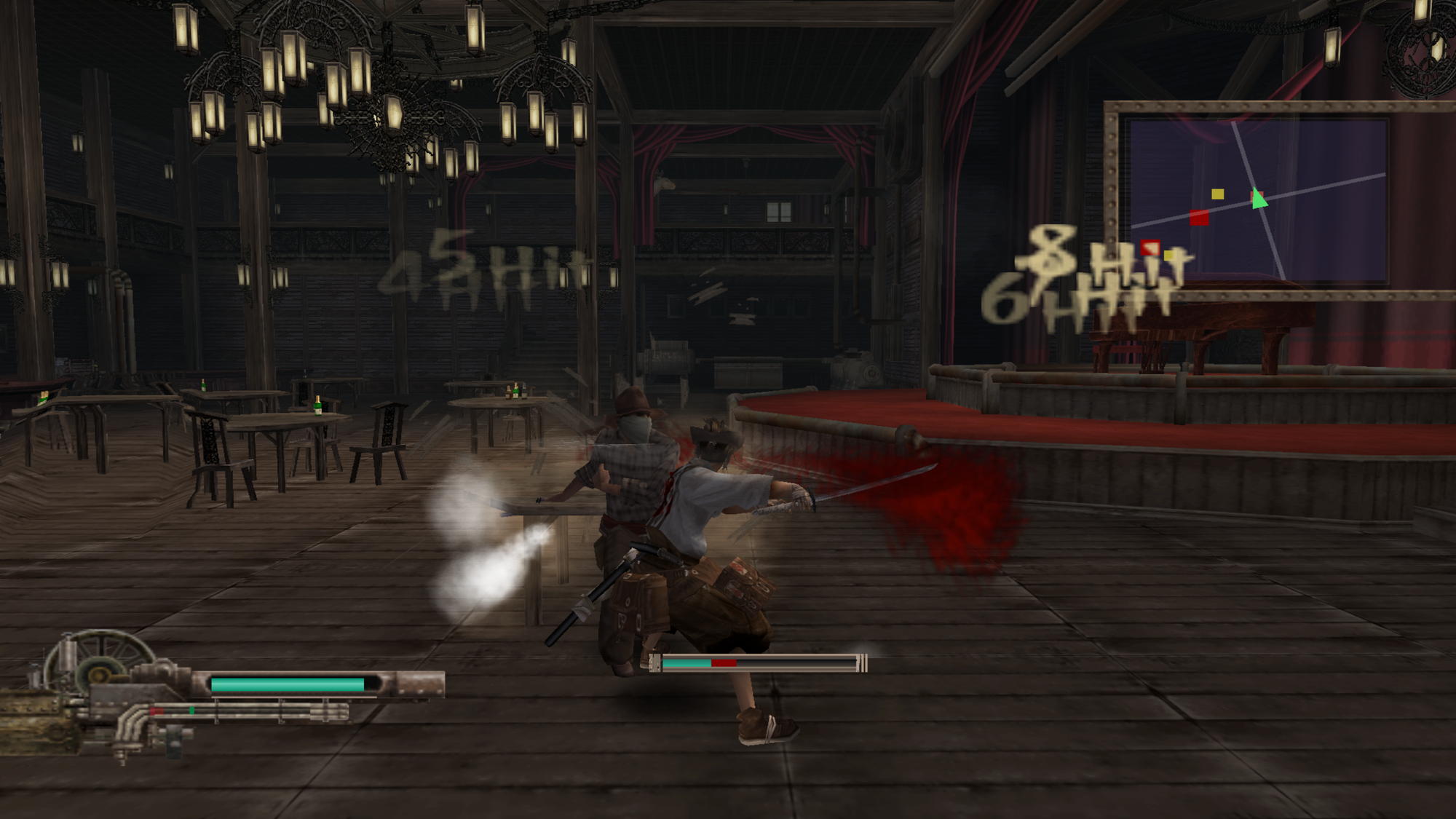
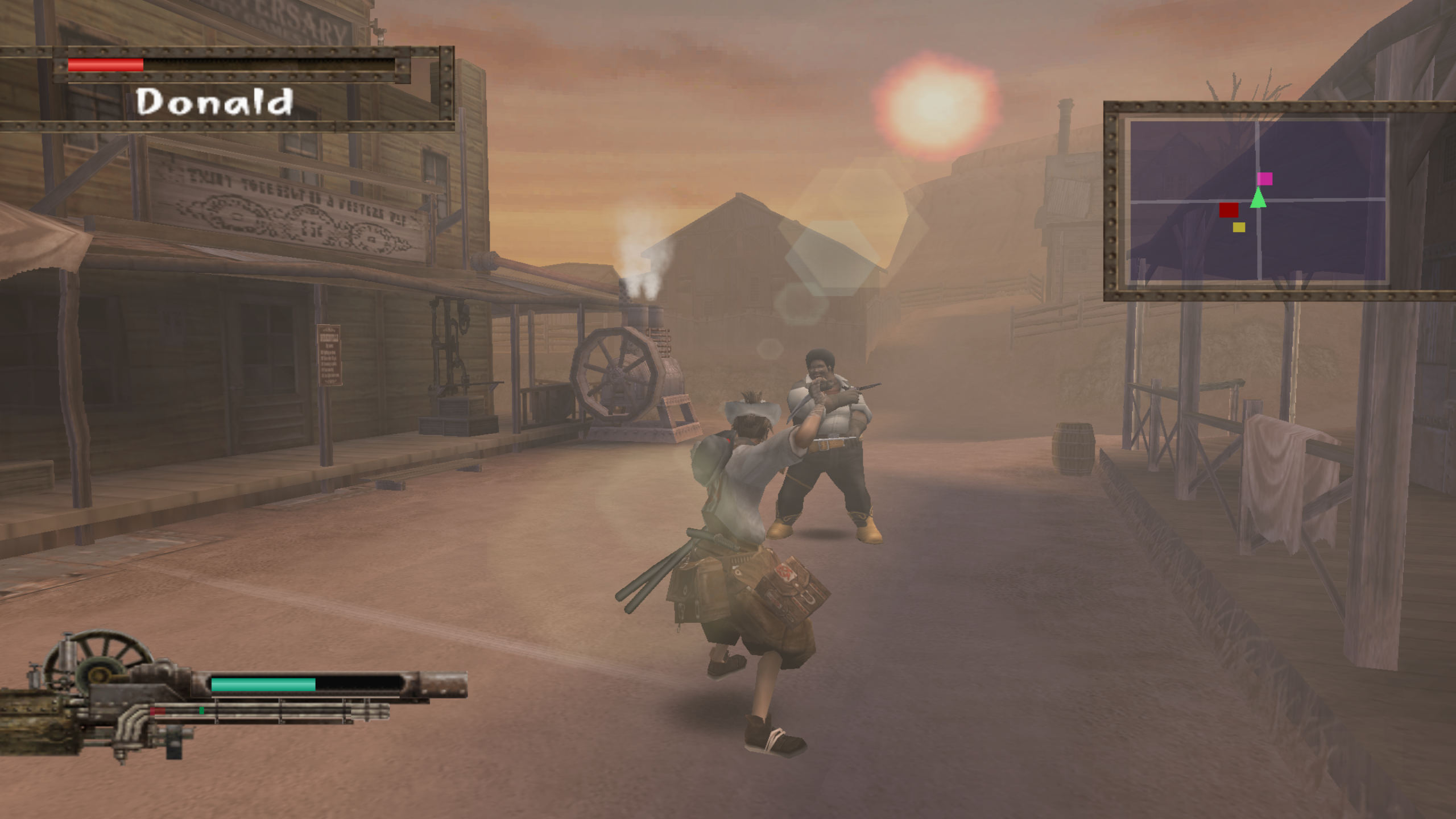
Samurai Western fights are dynamic, with a little bit of unfairness at times.
Yet Samurai Western can be unforgiving at times, with a level of difficulty that can sometimes feel unfair, which is the game's main issue. Most levels are really satisfying, with a fair progression curve. The bonus points spent on defence and health help a lot when it comes to overcoming most challenges. However, a few sequences, particularly boss fights, can feel overwhelmingly unfair due to some enemy designs. For example, one boss can deflect all attacks, and the only way to damage him is to attack from behind. However, the window of opportunity to get behind him is very short. If we are not perfectly aligned behind his back, the attack is deflected and our character takes counter damage. This makes combat more frustrating than it should, with a difficulty to overcome that feels more artificial than rewarding. The same applies to another boss who would be fairly easy to kill if he wasn't accompanied by waves of fast-shooting cowboys, forcing the player to dodge non-stop with very short windows of opportunity to attack the boss. This makes the fight lengthy and leaves little room for error. However, I persevered and enjoyed every minute of the game, which was a lovely surprise as I usually am not a big fan of score-oriented beat them all. The music is good, the art is surprisingly well done, and I smiled every time all the enemies in a saloon shouted "Hot dang!" when they saw the hero evade and dance between bullets. What more could I ask for?